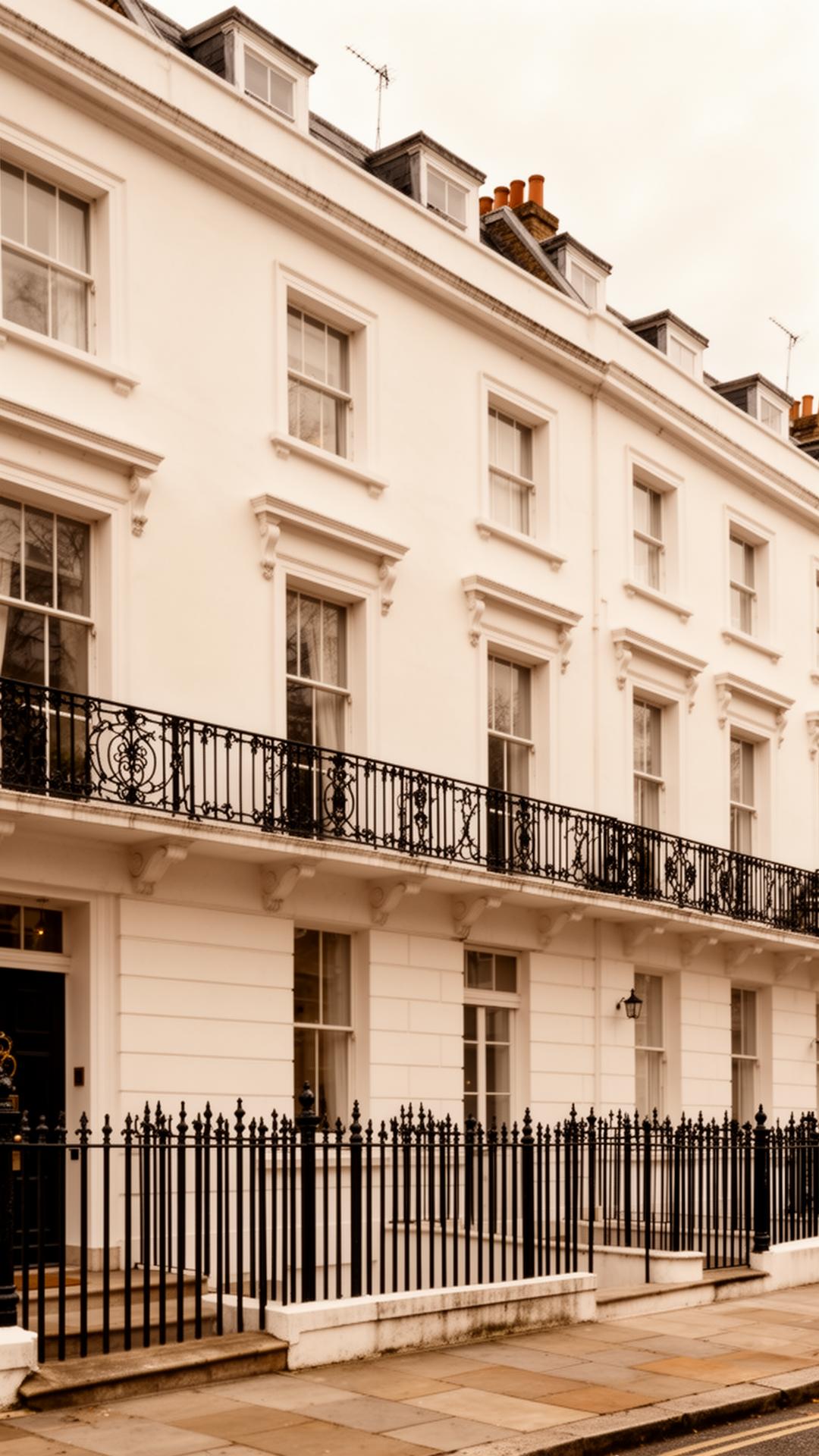
Some of London's most beautiful homes come with an extra layer of responsibility. If your property sits in a conservation area or is listed, the rules governing what you can do are tighter — and getting them wrong is costly. Here is what every owner should understand before they begin.
London's character is protected. Across the capital, hundreds of conservation areas and many thousands of listed buildings are safeguarded for their architectural and historic value. It is part of what makes owning a London home special — and it comes with obligations that catch owners out more than almost anything else in renovation.
The two designations are different, and a property can carry one or both. Understanding which applies to you, and what it means, is the essential first step of any project — long before a single wall is touched.
Conservation areas: what changes
A conservation area is a designated stretch — a street, a square, a terrace — protected for its special character. Designation does not stop you renovating, but it tightens the rules, particularly for anything visible from the street.
Within a conservation area you may find that:
- Permitted development rights are restricted or removed, so work that would need no application elsewhere may require planning permission here.
- Changes to windows, doors, roofs, cladding and the front elevation face far greater scrutiny.
- Even seemingly minor external alterations — rendering, painting, a new front door, rooflights — can require consent.
- Demolition is tightly controlled, and trees within the area often carry additional protection.
The difficulty is that nothing on the property tells you it is in a conservation area. Two identical houses on the same road can fall inside and outside the boundary. It is easily missed — and expensive to discover late.
"Nothing on the property tells you it is protected. That is exactly why it is so easily missed."
Listed buildings: a higher bar again
Listing is a separate, and stricter, protection. A listed building is recognised nationally for its special architectural or historic interest, and the listing typically covers the whole building — inside and out — not just the façade. Many owners are surprised to learn that internal features, fireplaces, staircases, plasterwork and even later additions can be protected.
For a listed building, the key points are:
- Most alterations — internal or external — require Listed Building Consent, which is separate from planning permission.
- Consent is needed even for work that might seem minor, if it affects the building's special character.
- Carrying out unauthorised work to a listed building is a criminal offence — the stakes are materially higher than an ordinary renovation.
- The right approach is sympathetic: repairing rather than replacing, using appropriate materials and methods, and working with the building's character rather than against it.
Listed-building work is a specialism. It calls for the right expertise, the right consents, and often the involvement of conservation officers and heritage professionals. Done well, it is deeply rewarding. Done without care, it risks both the building and serious legal consequence.
Why owners get caught out
The pattern is a familiar one. An owner assumes a project is straightforward, plans and budgets around that assumption, perhaps even begins — and only then discovers that consent was required from the start. Work may have to stop; plans may need reworking; retrospective applications may be required; and in the worst cases, unauthorised work must be undone. What began as a manageable project becomes a costly, stressful one — not because of the building work, but because of a check that was never made.
What to check, and when
- Confirm the designation first. Before any design, establish with your local authority whether the property is in a conservation area, listed, or both.
- Understand the specifics. Each conservation area has its own character appraisal and controls; each listing has its own description of what is protected. Knowing the detail shapes the whole project.
- Pursue the right consents, early. Planning permission and Listed Building Consent are separate; you may need one, the other, or both. Build the timeline for these in from the outset.
- Design sympathetically from the first sketch. The best results come from designing with the building's character in mind, not fighting it later.
How the right partner protects you
This is precisely the kind of work that separates a properly managed renovation from a risky one. A construction partner who understands London's conservation areas and listed buildings establishes the designation and its implications before a single decision is made — so the design is developed correctly, the right consents are pursued in good time, conservation officers are engaged constructively, and there are no unwelcome surprises once work begins.
At Trident Master Construction, we treat these projects with the care and respect they demand. We understand the rules, we design sympathetically within them, and we guide our clients through the consents so the process feels considered rather than fraught. The result is work that honours the building, satisfies the authorities, and protects your investment — and its heritage — for the long term.
If your property is in a conservation area, listed, or you simply aren't sure, that uncertainty is exactly where we can help most.
Planning work on a period, conservation-area or listed property? Speak to our team before you begin.